
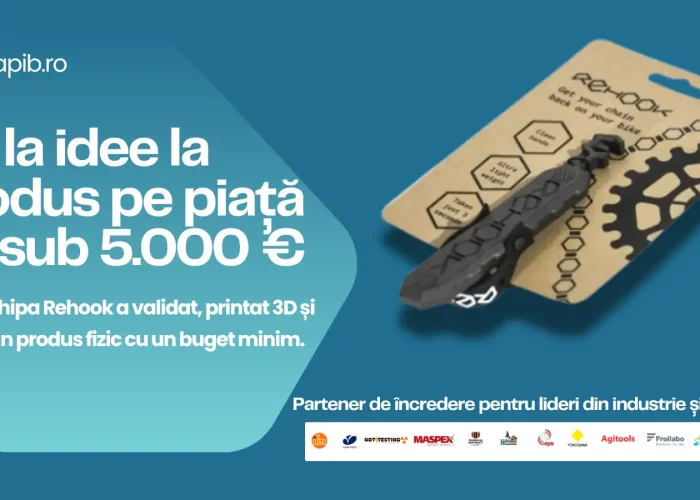
3D printing isn't just about figurines or decorative items on social media. When used correctly, it can turn an idea into a successful commercial product through rapid prototyping, without major investments—as shown in the Rehook case study from the book The 3D Printing Handbook.
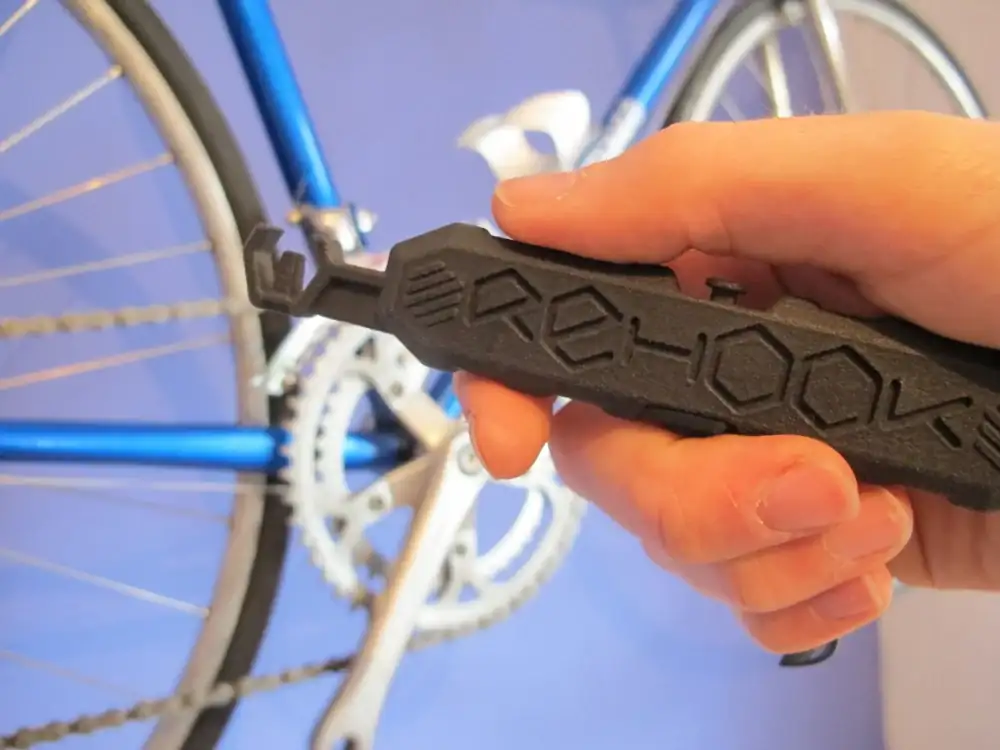
The idea for Rehook—a tool for quickly reattaching a bicycle chain—was born after founder Wayne Taylor’s chain fell off during his daily ride. Taylor needed a solution that could be manufactured quickly, without a large initial investment.
The first prototypes were created using a desktop FFF printer, a plastic 3D printing method that allowed for rapid testing of several design variations. For production, the team switched to SLS, chosen for its durable materials and mass production capabilities—a method of manufacturing plastic parts well-suited for medium-volume production. In the first batch of 50 prototypes delivered to testers, a structural weakness was identified. With injection molding, the correction would have been costly; thanks to 3D printing, the modification was made very quickly and at no additional cost. The material was then changed from carbon-reinforced nylon to graphite-reinforced nylon to reduce weight—an important consideration, given that Rehook is constantly attached to the bicycle or the cyclist.
Source: The 3D Printing Handbook, Table 21.4.
Note: The prices are from 2018, and current market costs in 2026 are 2–3 times higher than in 2018 for the production of a mold, due to the rising cost of raw materials as well as other expenses.
Using SLS printing, the Rehook team met market testing and development demand (~400 units/month). Rehook subsequently switched to injection molding once the volume justified the investment.
| Indicator | Injection molding | 3D Printing |
|---|---|---|
| Initial Cost | ≈ €8,200 (including the mold) | ≈ 520 € |
| Delivery Time | 40 days + 70 days for mold production = 110 days | 10 days |
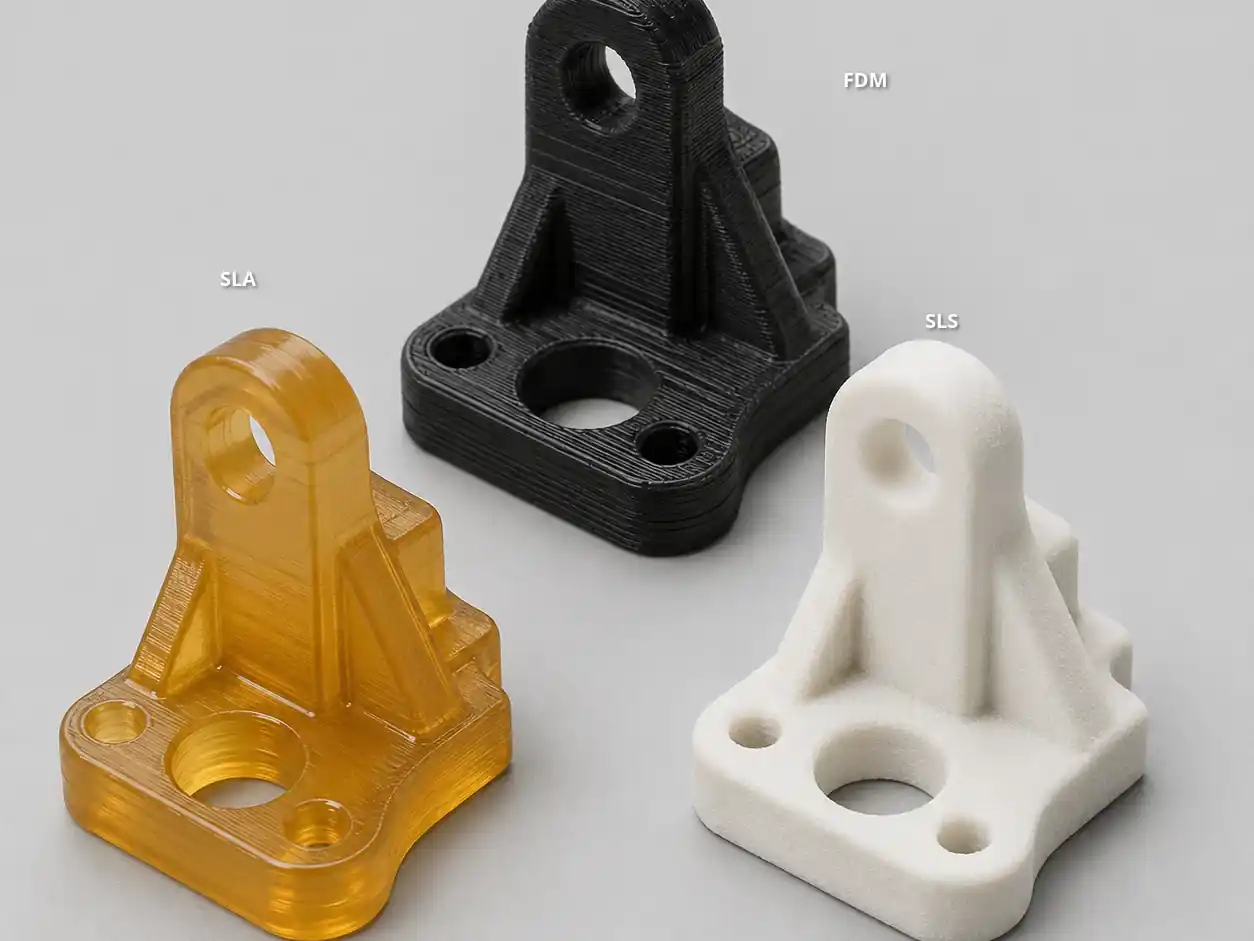
The two technologies aren’t competing with each other; rather, they cover different stages. Filament-based printing (FDM) is inexpensive per iteration, so it’s suitable when you’re still changing the design from one day to the next and just want to check whether the part fits correctly on the frame. SLS comes into play when the part needs to withstand use by a real user: it sinteres polyamide (nylon) powder and produces functional parts with a dimensional accuracy of ±0.3% and a lower limit of ±0.2 mm.
Nylon can be mixed with aluminum, glass, carbon, or graphite to produce composite powders with a better strength-to-weight ratio, wear resistance, or antistatic properties. This is precisely the explanation for the change made by Rehook: switching from carbon to graphite maintained the strength but reduced the part’s mass. The compromise—often overlooked—is that composite powders make the part anisotropic, sometimes up to 40% weaker in the build direction compared to plain nylon, which is essentially homogeneous. The orientation of the part in the printer thus becomes a design decision, not a detail left up to the operator.
The cost of the powder directly affects the price of the part. In 2018, the price was approximately $50–60 per kilogram for standard PA 12. Today, a kilogram of PA 12 nylon powder costs between €60 and €100, depending on the supplier and the type of powder, with the upper end being nearly double the reference price in the book. For this reason, recycling unsintered powder has become an economic factor, not just an environmental one.
Manufacturing processes fall into three categories, each with its own economic advantages. Formative manufacturing—that is, injection molding—requires a large investment in tooling but then produces parts quickly and at a very low unit cost, making it unbeatable for high-volume production. Subtractive manufacturing, such as CNC machining, is suitable for relatively simple geometries in small to medium production runs, particularly for metal parts. Additive manufacturing is suitable for small production runs, complex geometries, and one-off prototypes, with no tooling costs.
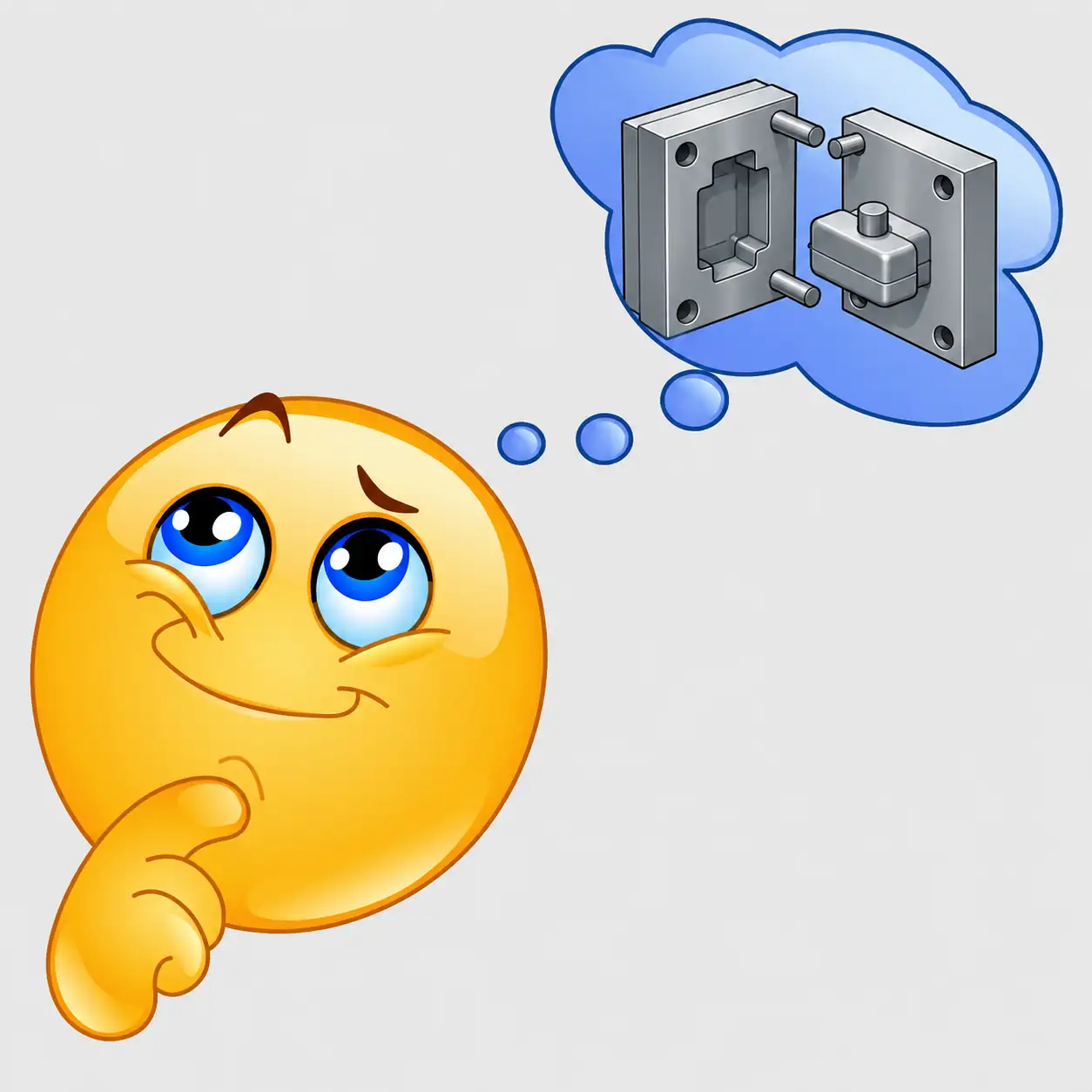
The practical difference isn’t the price of the part, but when you pay for it. With injection molding, you pay for the mold before you know if the product will sell; and if a design correction is needed—as was the case with the first Rehook batch—you pay a second time. With 3D printing, the cost per part is nearly constant, so you don’t get economies of scale, but you also don’t have any risk tied up in steel.
There is no universal threshold for unit volume. Rehook stayed with SLS as long as ~400 units per month met demand, and switched to injection molding only when the volume justified it. Elsewhere, the book features a manufacturer that produces a protective USB cover in a volume of just 200 units per year: in that case, injection molding had been discontinued by the original supplier, and 3D printing remained the cost-effective solution, with a tolerance of 0.127 mm on critical dimensions, achieved on an industrial FFF printer. The threshold depends on the part’s complexity, the material, and the cost of the mold—not on a fixed number.
Product development, market testing, and launch were completed in just 10 weeks, with a budget of less than €5,000. Within 12 months, Rehook had already sold several thousand units, and international distribution agreements were nearing completion—a clear example of the advantage of 3D printing: it reduces risk in product development by enabling rapid testing and demand validation before investing in molds.
| Feature | Injection molding | 3D Printing |
|---|---|---|
| Initial Investment Required | Stamped (dedicated die) | Discounted, no tools required |
| Design Flexibility | Low — fixed mold | High — rapid changes |
| Cost of a design change | Complex, complicated process | Virtually zero |
| Suitable for | High-volume production | Prototyping and Small- to Medium-Volume Production |
How many pieces do I need to make it worth buying a mold?
There is no one-size-fits-all number for every part. The calculation is done by comparing the cost of the mold plus the unit price per injection with the price per printed part, based on your actual monthly volume. In the examples in the book, the break-even point was somewhere above 400 pieces per month in one case and wasn’t reached at all at 200 pieces per year in another.
Can I go from the printed part directly to the mold?
Rarely without adjustments. Molded parts have their own design constraints, such as draft angles and uniform wall thickness, and the mold requires runner systems. If you know from the start that you’ll be using injection molding, it’s cheaper to follow those rules right from the CAD phase.
Is the printed part durable enough for real-world use?
For many applications, yes. SLS nylon produces functional end-use parts, and reinforced variants increase wear resistance and the strength-to-weight ratio. One simply needs to take into account the anisotropy of composite powders and the fact that, in general, printed parts do not yet match the properties of injection-molded parts.
At Capib.ro, we help you just like in the Rehook example: we turn your concept into a functional prototype through CAD design and 3D printing—quickly and without the costs of mass production. We cover the entire process—from development to the manufacture of plastic parts, including mold design—with expertise in the medical, electronics, construction, and automotive industries, through collaborations with companies such as IFM Romania, Froilabo, EPS, Maspex, and many others.
Send us a message—we’ll provide a free consultation within 2 hours at the latest, and within 24 hours at the latest for complex projects.
Add Capib.ro as a trusted source in Google search results
Capib.ro turns your 3D model into a clear offer. Rapid, no questions asked, and you know exactly from the start how much you pay.
Our configurator instantly calculates the price and delivery time—no need to wait for a response.
You pay exactly what you see in the offer—no hidden costs and no haggling via email.
Upload the file, get a quote, and place your order—all directly from your browser, without any software.
We work with FDM, SLA, and SLS, using more than 20 different materials—for any project, from a single prototype to a small production run.